Social media can be a useful place to share creative work. It is quick, familiar and often where people first discover artists, photographers, designers, makers and studios.
But it should not be the only place your work lives.
Your own portfolio website gives you control. You decide how the work is presented, how projects are described, what visitors see next and how potential clients get in touch. That control is difficult to replace on platforms you do not own.
You own the experience
On social media, your work sits inside someone else’s design, feed and algorithm. It can be surrounded by adverts, distractions, comments and competing posts. Even people who like your work may scroll past it in seconds.
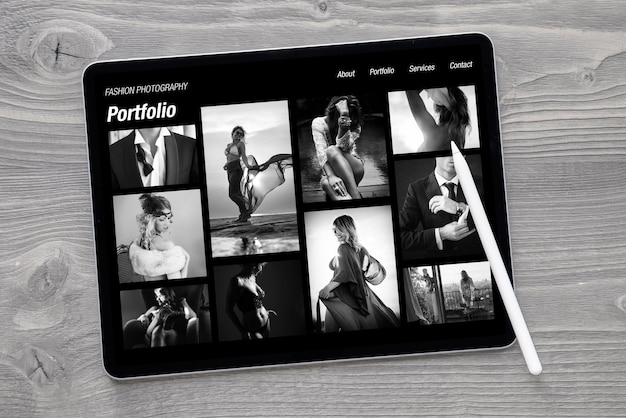
On your own website, the experience is yours. You can group projects properly, write thoughtful descriptions, show larger images, explain your process and guide visitors towards an enquiry.
For creative work, presentation matters. A strong portfolio website lets the work breathe.
A website makes you easier to trust
Clients often look for reassurance before making contact. A clear domain name, professional email address and well-structured portfolio can make a creative business feel more established.
That does not mean the site needs to be complicated. A simple website with a strong selection of work, a short about page, testimonials and a clear contact route can be more convincing than a busy site with too much decoration.
The goal is to make it easy for someone to understand what you do, whether your style fits their project and how to speak to you.
You can tell the story behind the work
Images are important, but clients often want to know more. What was the brief? What problem did you solve? What was your role? How did the final result help the client?
Project pages give you space to answer those questions. They can turn a gallery into a set of case studies, which is much more useful for commercial work.
This also helps with search. A page that includes relevant written detail gives search engines more context than a social image post alone.
You are less dependent on platform changes
Social platforms change constantly. Reach rises and falls. Layouts change. Accounts can be restricted. Popular formats come and go. A platform that works brilliantly for you one year may feel much harder the next.
Your own website gives you a more stable base. You can still use social media to attract attention, but your domain remains the place you send people when they want to see your best work properly.
Think of social media as rented visibility and your website as owned space. That may sound simple, but it is a useful distinction.
Your domain becomes part of your brand
A good domain name is useful for more than the website itself. It gives you a professional email address, a memorable link for proposals and a consistent home for your portfolio.
If your name or studio name is available, it is often worth securing. If not, choose a variation that is clear, credible and easy to say aloud. Creative domain extensions such as .photography, .photos, .gallery, .art and .design can also work well where they suit the brand.
For photographers, designers, illustrators and other creatives, a domain can become part of how people remember and recommend you.
Keep the portfolio focused
One common mistake is trying to show everything. A portfolio should show the work you want more of, not every project you have ever completed.
Choose strong pieces, organise them clearly and keep the route through the site simple. If you work across several disciplines, use categories or project types so visitors can quickly find what matters to them.
Make sure images are optimised too. Creative sites are often image-heavy and large files can slow pages down. Good hosting, sensible image sizes and modern formats can make a noticeable difference.
Make contact obvious
If someone likes your work, the next step should be easy. Put a contact link in the main navigation, include calls to action on project pages and make the enquiry form simple.
Ask for enough information to start a useful conversation, but not so much that the form becomes a chore.
A portfolio website does not need to shout. It needs to show your work clearly, build confidence and make enquiries simple. For most creatives, that makes it one of the most important assets they can own.