
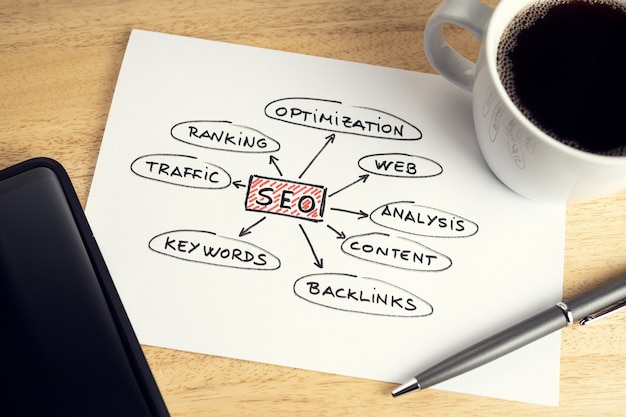
SEO can sound more mysterious than it needs to.
At its best, search engine optimisation is about making your website useful, understandable and technically sound. Search engines want to send people to pages that answer their questions well. Your job is to make those pages easy to find, read and trust.
For small businesses, that does not have to mean chasing every trend or learning a new language overnight. It means doing the basics consistently.
Start with the pages that matter
Not every page deserves the same attention. Begin with the pages that support your business most directly: key services, product categories, location pages, landing pages and useful guides that answer common customer questions.
Make sure each important page has a clear purpose and a specific topic.
Use the language your customers use
Keyword research is not about stuffing awkward phrases into every paragraph. It is about understanding what people actually search for.
A customer may not use the same words you use internally. They might search for "business email hosting", "WordPress hosting UK", "website maintenance", "domain renewal" or "how to speed up a WordPress site".
Use natural language, but make sure the subject is clear.
Write helpful title tags and descriptions
The title tag is one of the strongest signals of what a page is about. Keep titles descriptive and specific.
A page title such as "Managed WordPress Hosting for Small Businesses" is far more useful than "Services". Meta descriptions are not usually a direct ranking shortcut, but they can influence whether someone clicks.
Think of them as tiny adverts for the page.
Improve internal links
Internal links help visitors and search engines move through your site.
Link from relevant blog posts to service pages. Link between related guides. Make sure important pages are not buried several clicks away from the home page.
Good internal linking also helps older articles keep working for you.
Keep the site technically healthy
SEO is not only about words. A slow, broken or awkward website will hold you back.
Check mobile usability, page speed, broken links, SSL, duplicate pages and indexing settings. If WordPress is involved, keep themes and plugins under control.
The technical basics create the foundation for your content.
Build trust over time
Search visibility usually improves gradually. Publish genuinely useful content, keep your business details consistent, earn relevant links where possible and update older pages when they become stale.
Avoid shortcuts that promise instant rankings. Small businesses can make real progress with SEO by being clear, useful and consistent.